Understand what's getting in the way
A Production Health Check gives you an independent senior view of what's going wrong, with clear findings and priorities. £1,250 fixed fee.
Explore the Production Health Check →
 Ask the Production PandaDiscuss your needs
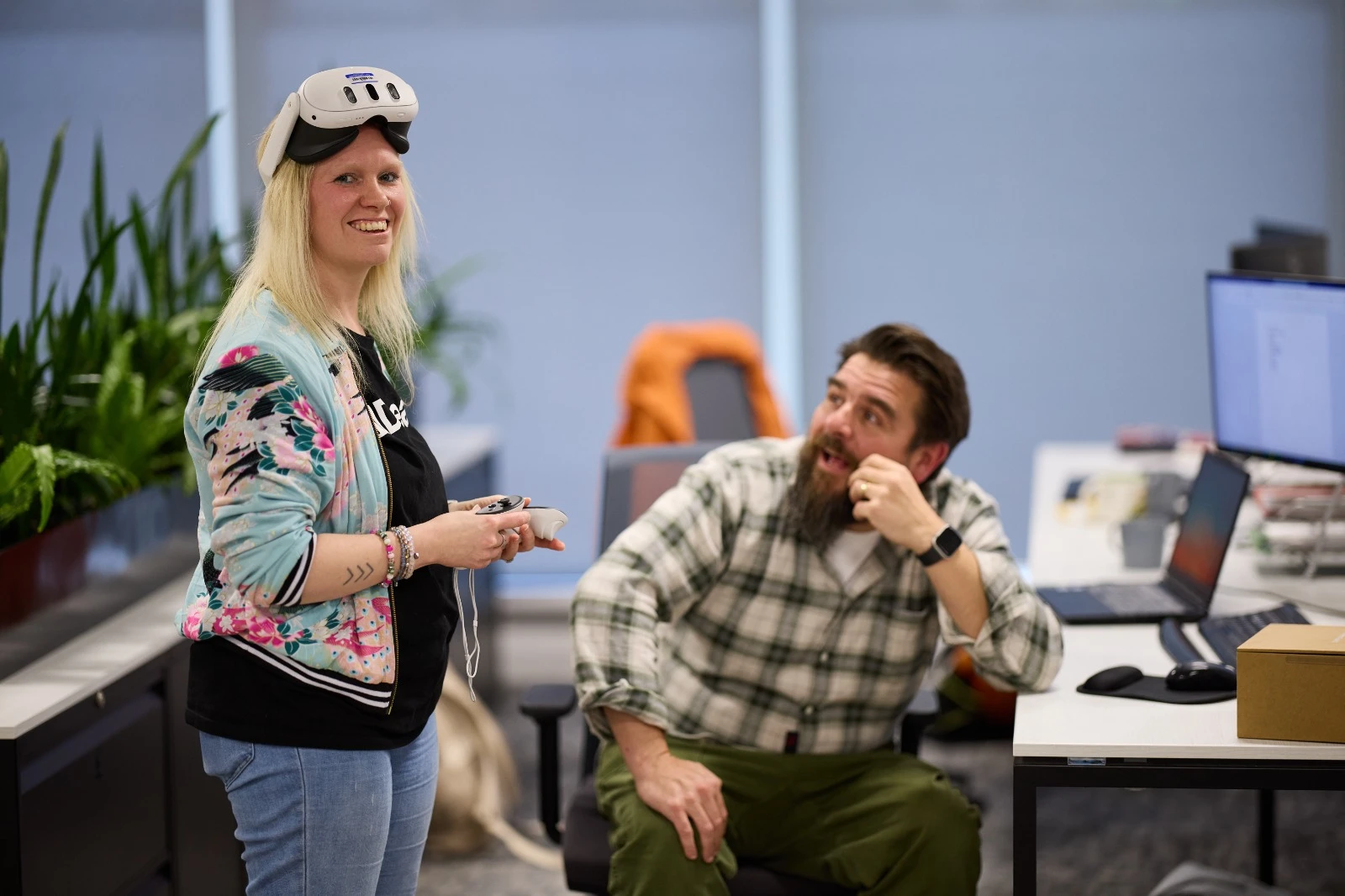
For studios dealing with production uncertainty, teams that don’t coordinate well or producers who need more support than they are getting. Start with a focused review, talk to a consultant or build a programme around your producers.
Discuss your studioA Production Health Check gives you an independent senior view of what's going wrong, with clear findings and priorities. £1,250 fixed fee.
Explore the Production Health Check →Talk directly to an experienced game production consultant. New clients start with a free 30-minute call, and agreed consulting time is £250 an hour.
Explore consulting →Choose 60-minute clinics that need no homework, or a 90-minute programme where producers practise together and follow up between sessions.
Explore studio programmes →Seat prices are the same wherever you work. Save 10% on 5–9 seats and 15% on 10 or more, and mix courses in one order.
See studio seat prices →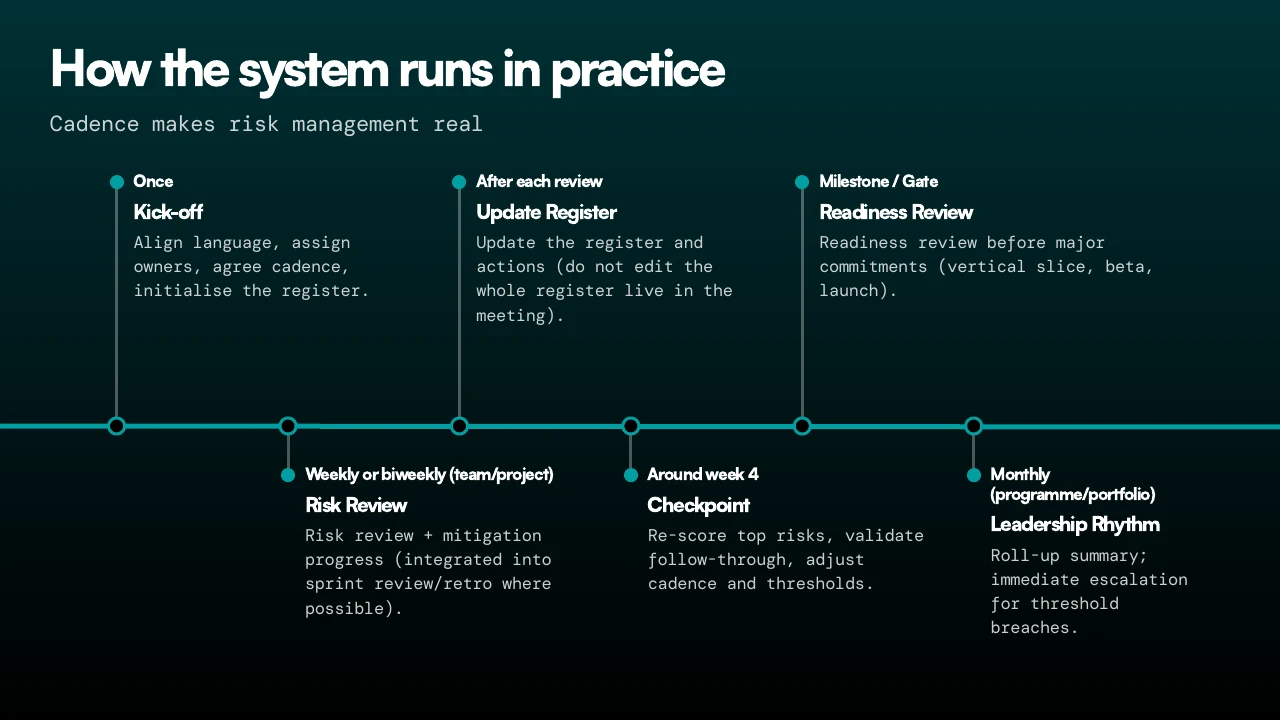
Studio risk systems
For when the risk register exists but nobody quite owns what is in it. You build a system your teams run together: a live register, named owners, a review rhythm, milestone gates and reporting leaders can decide from.
Moves risk out of one producer's head and into a routine the whole team runs.
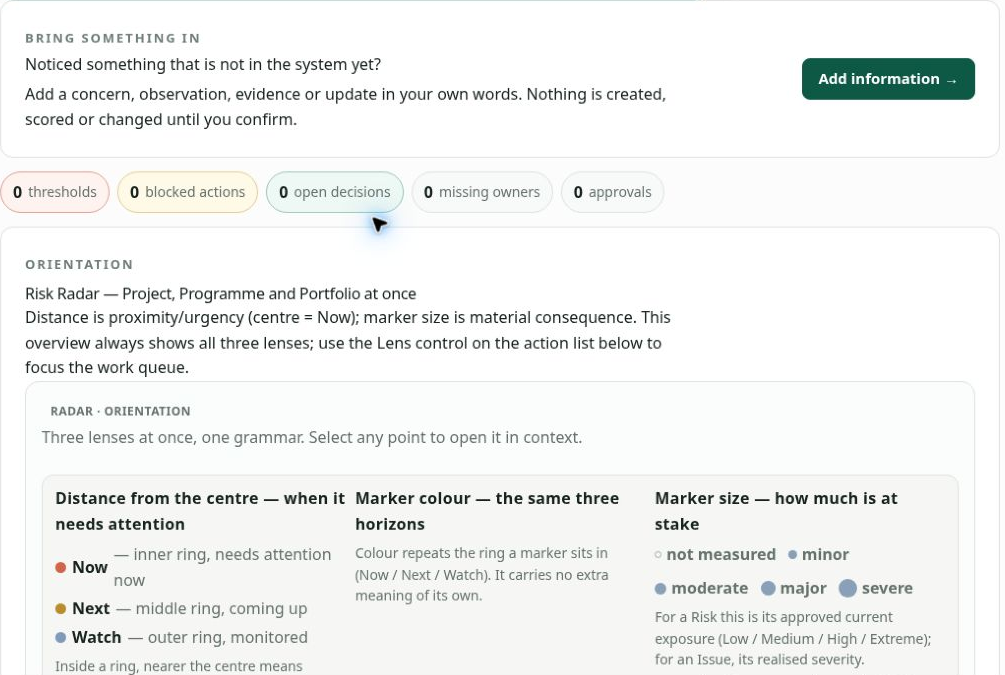
Our risk and decision system for senior producers is in pilot, and we're looking for a small, varied group of studios to test it with us.
Explore SRIS →Adding another process rarely fixes a problem that keeps coming back. We help studios change the conditions that keep causing it.
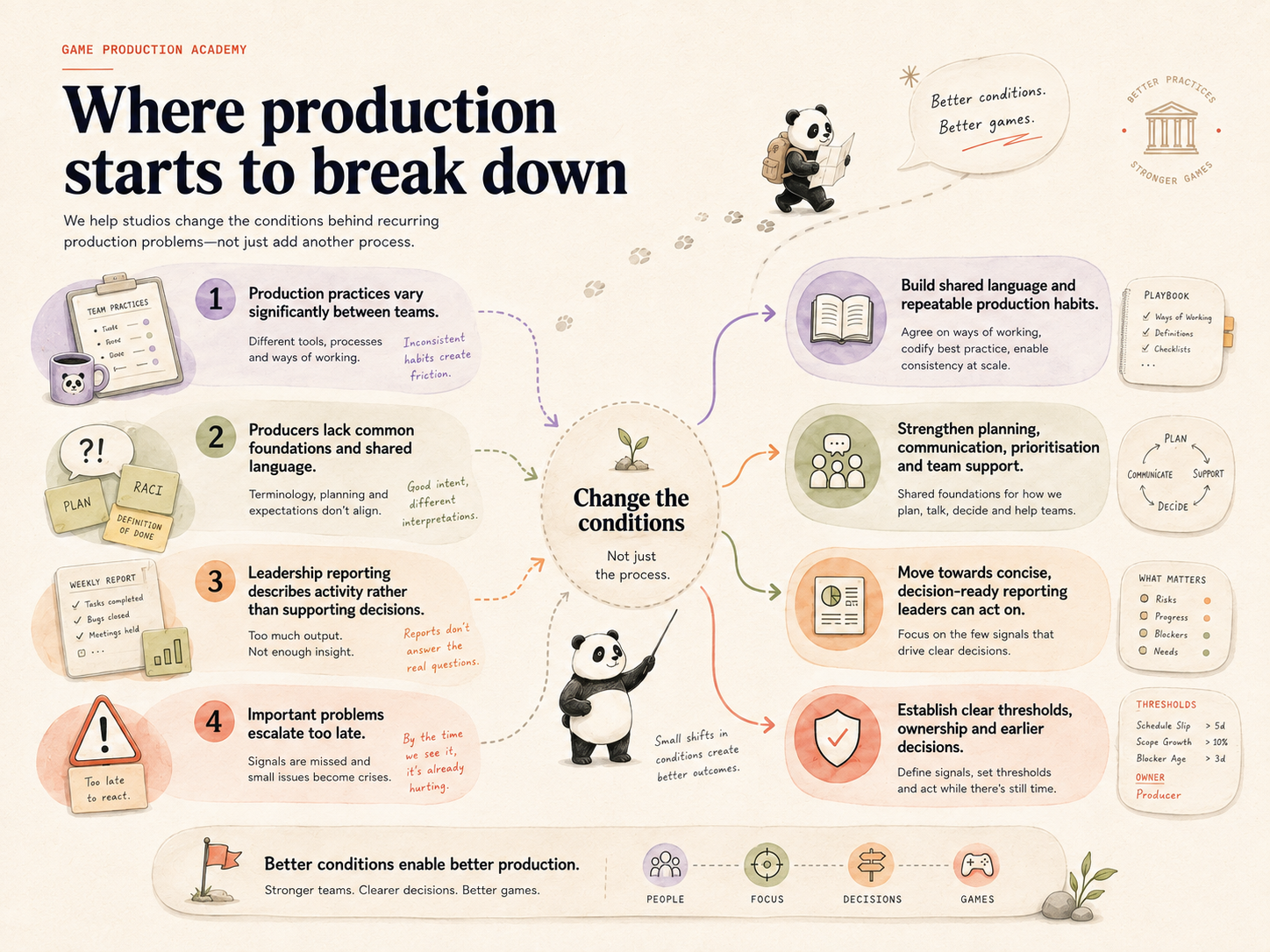
We adapt every piece of work to the studio, but it usually follows the same four steps.
That might be a shared model of the problem, a decision map, the outputs from a workshop, production tools your team keeps using or a clearer way of operating. If all you have at the end is a slide deck, something has gone wrong.
Studio Risk Foundations · Academy training examples
These are worked examples from the course. They are not client work or client results.
13 / Worked example
A one-page example that shows leaders the patterns, the thresholds already crossed and the choices waiting for them.
Shared backend constraint now threatens two committed beats
Shader validation gap is still driving vendor rework
Launch readiness remains exposed if rehearsal cover stays thin
Selected fields · example review dates retained from the source.
21 / Worked example
A short agreement on how the team raises concerns, takes them seriously and closes the loop.
Team leads bring threshold signals within one working day.
Calibration meetings use anchors and evidence.
All gate outcomes receive a decision record reference.
Top actions are linked to backlog items and checkpoints.
Escalation note sent within two hours of incident trigger.
Post-incident actions are reviewed at the next programme review.
Selected fields · working rules and how they show up in practice.

“Liam is all about ensuring teams have the skills and support they need to define their own futures.”