Build a risk-management system your studio can actually run.
When ownership is unclear, actions drift and escalation comes late, another template is not enough. This practical course helps producers and leaders connect risk, delivery work and decisions.
Senior and executive producers, project and programme leads, development and production directors, and studio leaders.
Especially useful when teams have templates but no consistent review rhythm, cross-team ownership is unclear, or leadership needs stronger evidence for decisions.
Across the development lifecycle
Apply the system through concept, production, launch, LiveOps and post-launch, including dependencies, external partners, milestone readiness and regulatory, security or data-related risks.
Alongside your existing tools
Keep Jira, Kanbanize, Trello or your current planning workflow. The aim is clearer ownership, action and reporting—not a second layer of administration.
02 · Review at the right level
Give each decision a place to happen.
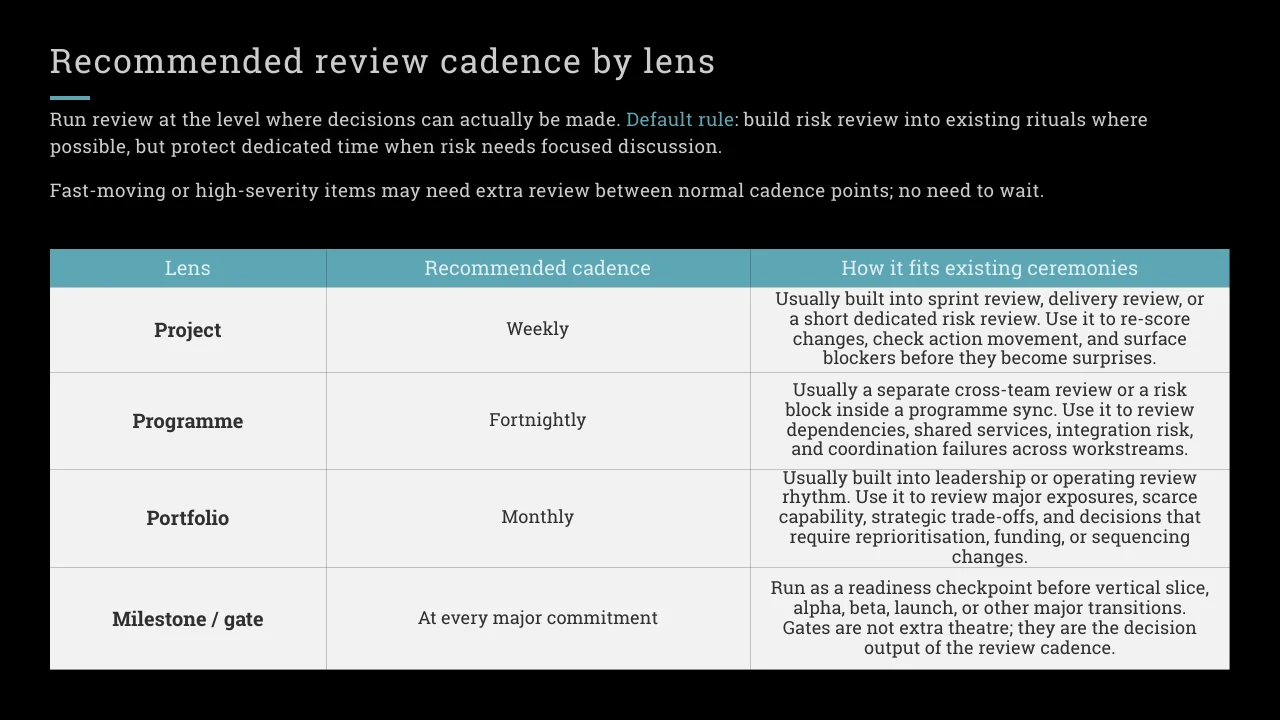
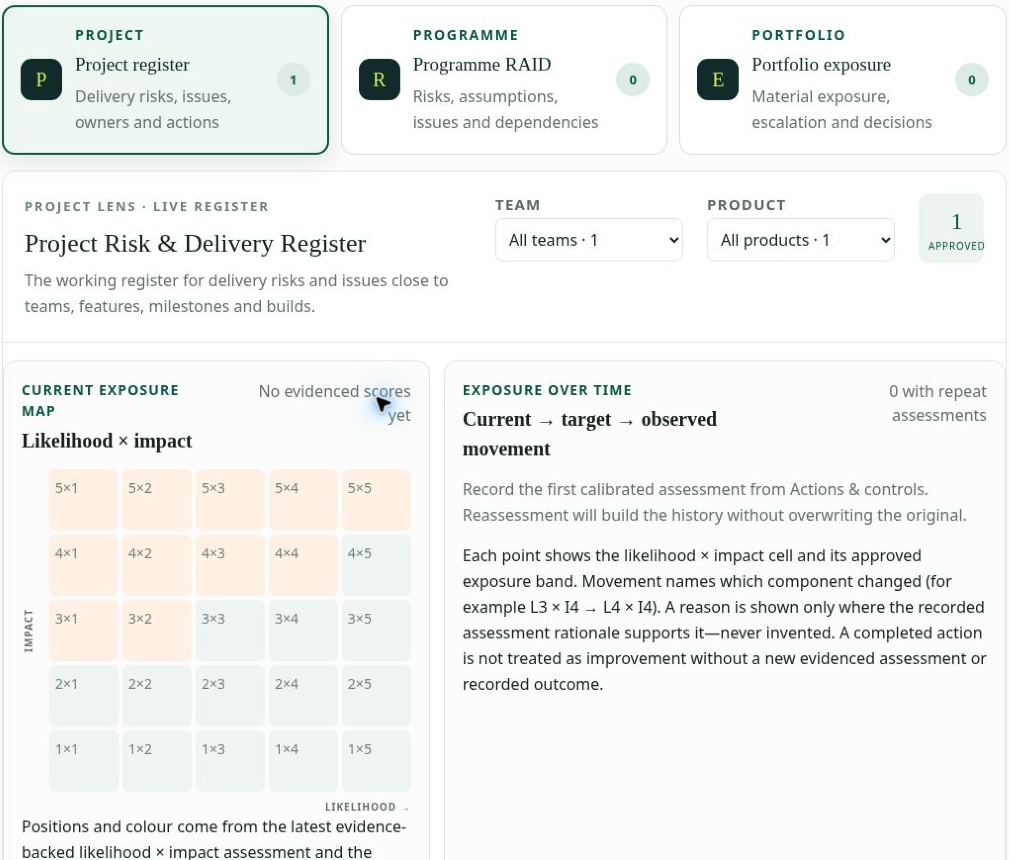
Project reviews keep actions moving. Programme reviews surface dependencies across teams. Portfolio reviews bring exposure and trade-offs to leadership. Milestone gates test readiness before major commitments.
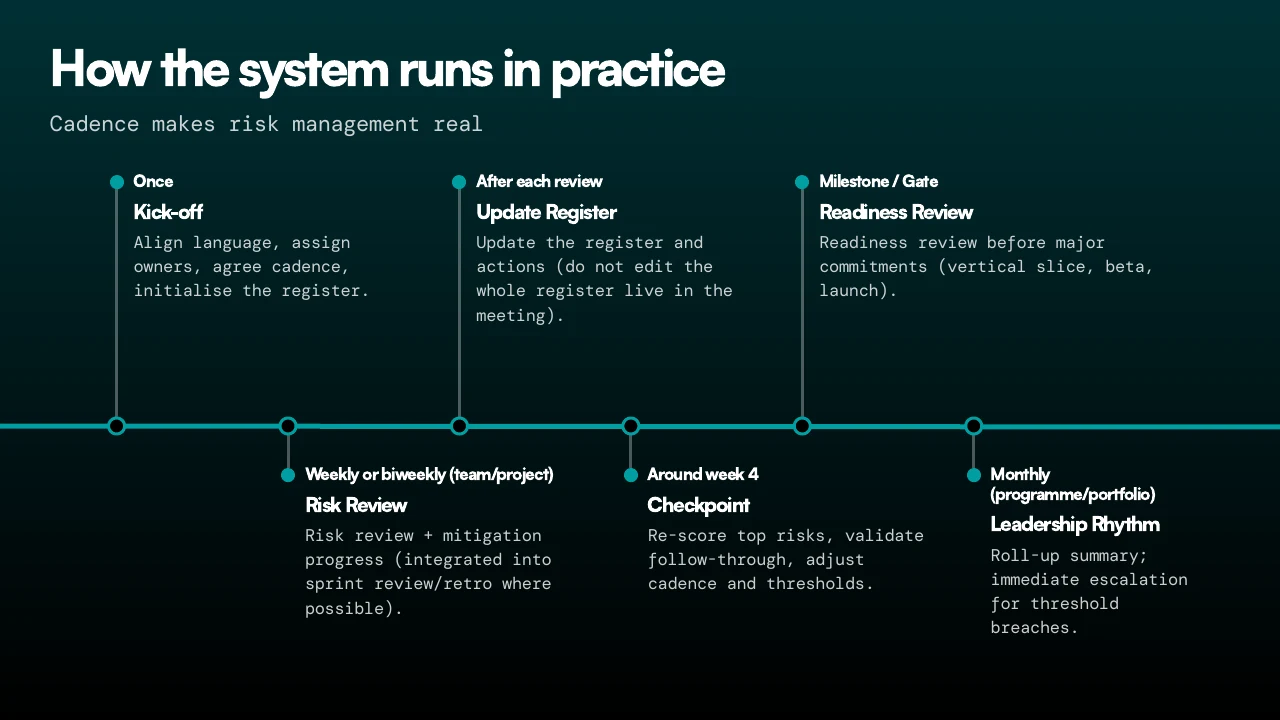
Build reviews into existing meetings where possible. Escalate urgent risks when they arise rather than waiting for the next meeting.
The aim is not more process. It is a clearer route through uncertainty.
Enough shared structure to know what needs attention, who owns the next move and when leadership needs to decide.
Course learner review · Thinkific
Implementing a Risk Management System for Game Studios
★★★★★Rated 5 out of 5 by this learner.
Practical, Impactful and Immediately Applicable
“I completed the course with greater confidence, stronger practical skills, and a clearer approach to managing risks, decisions and accountability. The results have already had a tangible and positive effect on my work.”
— Senior Project Manager, Wargaming
Licensing and rollout
Start with one practitioner. Build shared studio practice.
Individual
Self-paced access for a producer or lead developing a practical risk system.
Support by arrangement. Ask about studio-specific rollout, facilitated sessions or leadership-focused implementation support. Scope and licensing are agreed around your needs.
What success should look like
A system in use—not a folder of documents.
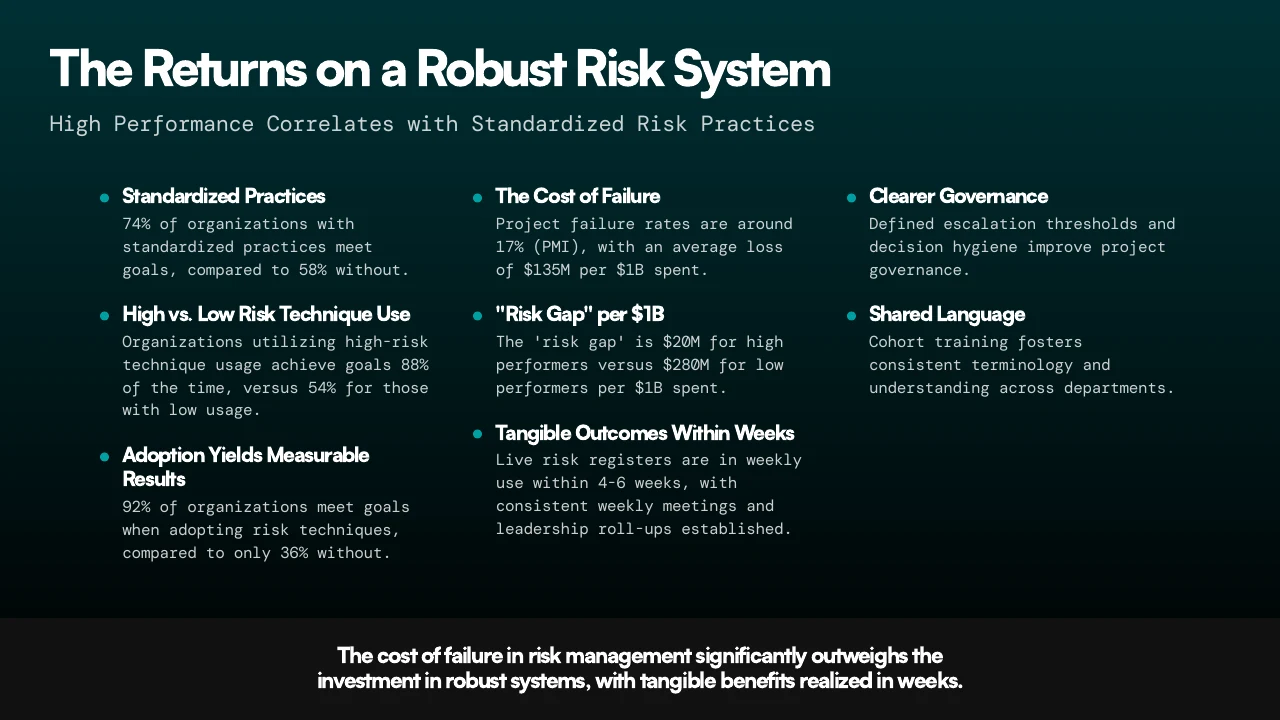
The intended outcome is an active, owned risk register; visible mitigation work; earlier cross-team escalation; and decisions that leaders can explain and revisit.
The course connects standardised practice with ownership, escalation and decision-making. Look for those habits in everyday work, not just completed templates.
Shown here as course material, not as a client testimonial or a promise of specific results for your studio.
IN DEVELOPMENT
Studio Risk Intelligence System
Risk intelligence for game studios
Turn production uncertainty into better decisions.
We are building Studio Risk Intelligence System (SRIS) as a persistent risk-intelligence system for game producers, project managers and production leaders.
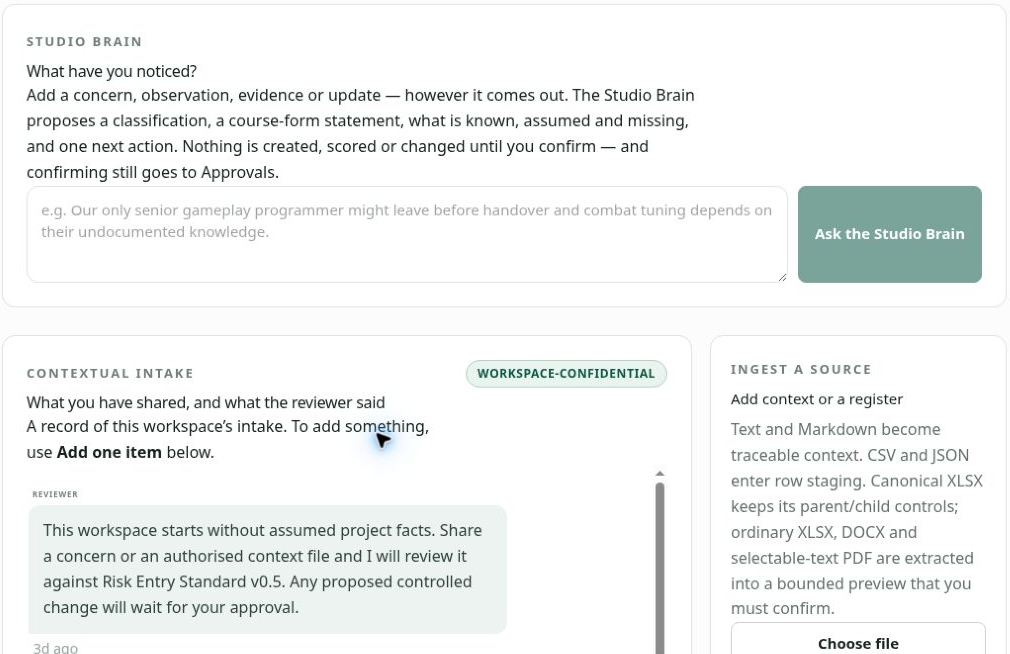
Bring in concerns, evidence and changes as the game develops. SRIS helps turn them into clear Risks, Issues, Assumptions, Dependencies and Opportunities, then connect them to the Actions, Controls and decisions that follow.
The context stays with the work. As production changes, SRIS is designed to help teams see what needs attention, what needs more evidence, what should be reassessed and what decision comes next.
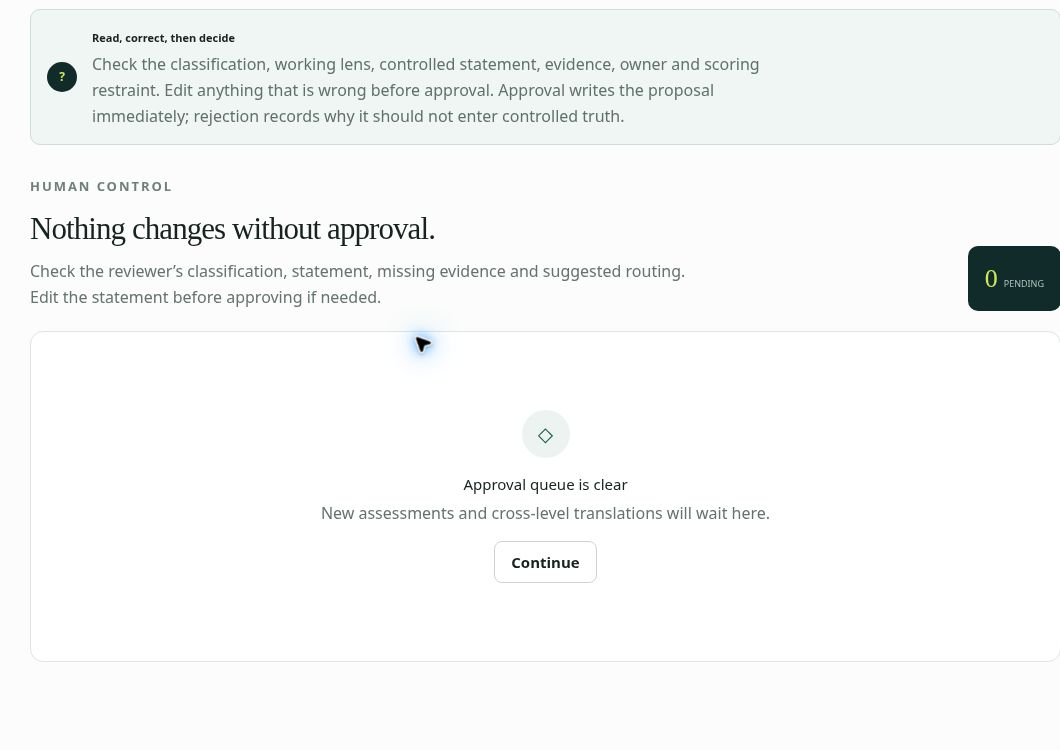
AI helps interpret, challenge and propose. You review and decide. Controlled information changes only when a person confirms it.
SRIS is currently in owner-only development and Product Owner testing. External access is not yet open.
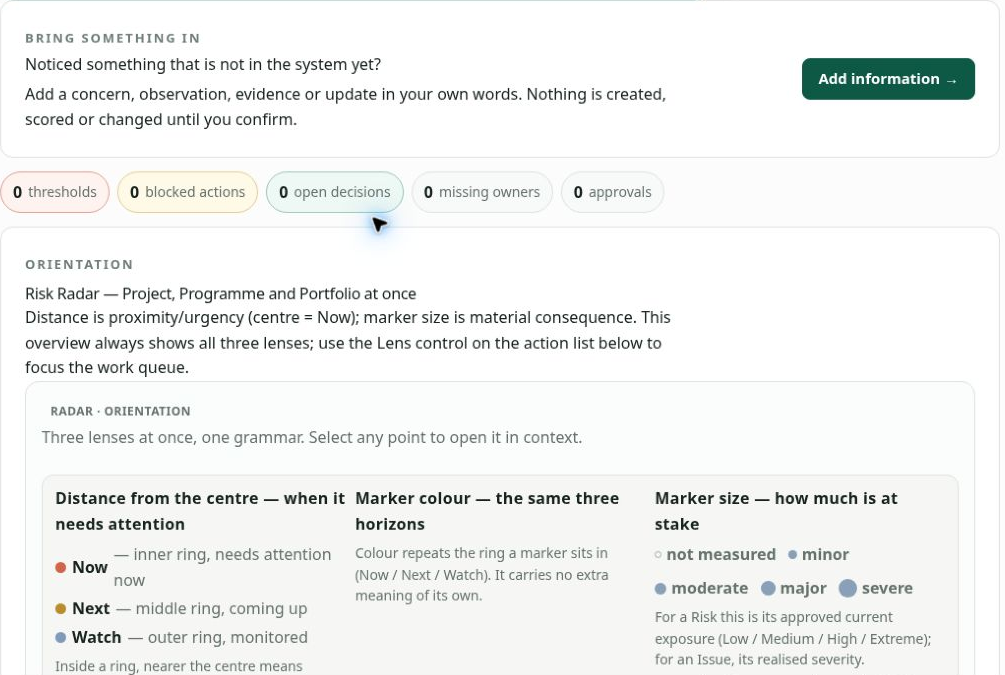
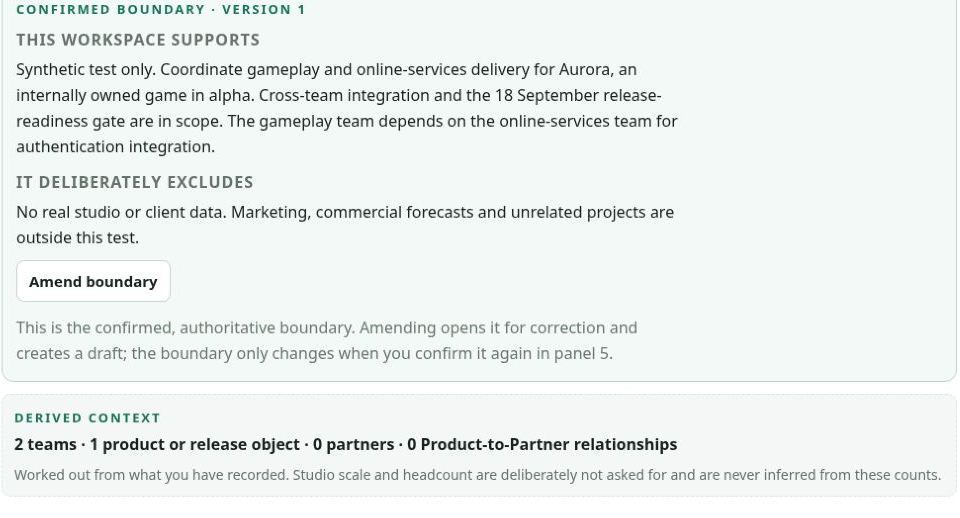
Product Owner-supplied screenshots. Select an image to read it at full size in a new tab.
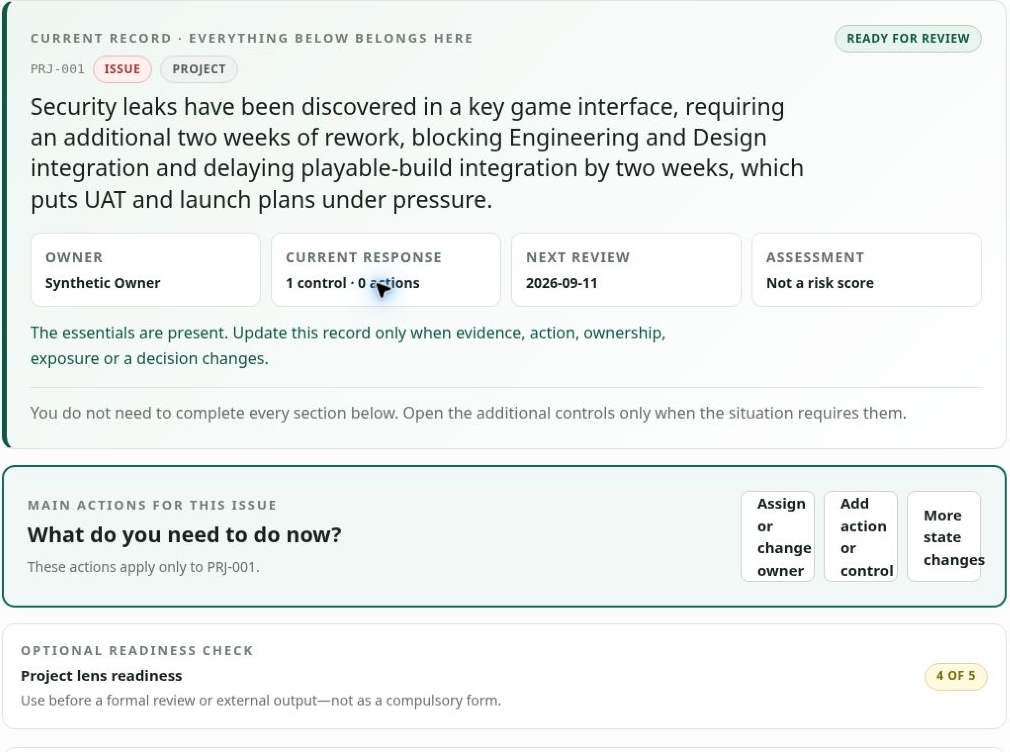
View full size ↗01 · Context inputStudio Brain and source intake.View full size ↗02 · Risk pictureProject, programme and portfolio lenses; no evidenced scores shown.View full size ↗03 · Actions and controlsA synthetic issue with one control and no actions.View full size ↗04 · Today and reviewAttention indicators and risk-radar orientation.View full size ↗05 · Human approvalThe approval queue is clear in this capture.View full size ↗06 · Operating contextA synthetic boundary describing a cross-team dependency.
Interested in Studio Risk Intelligence System?
Register your interest and we can contact you when there is a relevant studio trial, pilot or release update.
Your next step
Build the system around your studio.
Tell us who needs to use it, where delivery pressure is showing up, and whether you need individual access, team licensing or rollout support.
May we use Google Analytics to understand how this website is used and improve it? If you accept, Google receives usage and device information and analytics cookies are stored on your device. Analytics stays off unless you accept. You can change your choice here at any time. Read about analytics.