Plenty of studios have a risk register. Fewer have one that anyone opens between milestones.
If nobody is sure who owns an action, it drifts, and the escalation arrives after it could have helped. Another template will not fix that. This course helps producers and studio leaders tie risk to the delivery work and to the decisions that depend on it.
You work through studio scenarios and build the records that make risk visible to the people who need to see it.
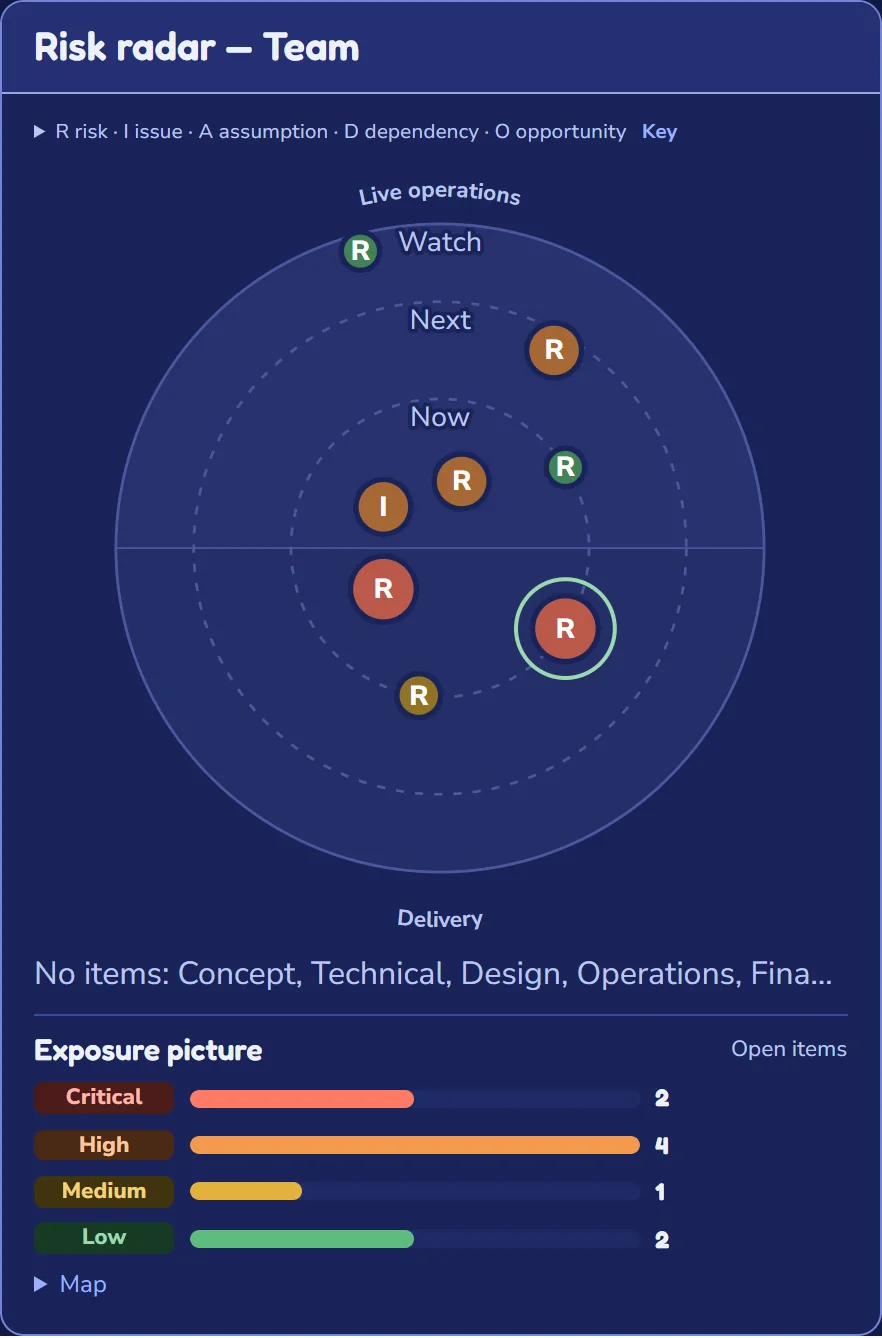
A live risk register or RAID
Mitigation plans with owners, triggers and follow-through
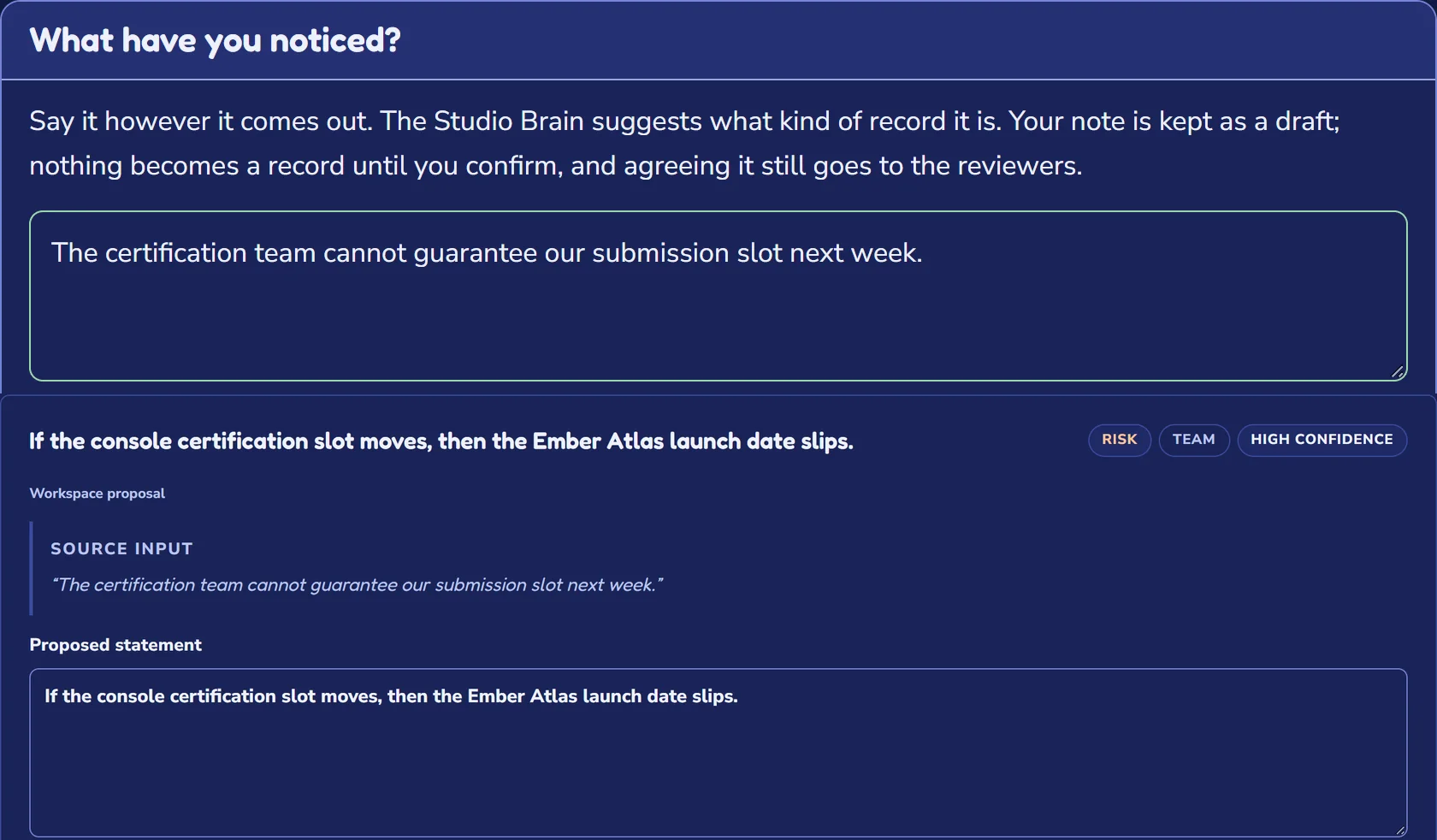
Decision records linked to risks and trade-offs
Leadership summaries, gate reports and one-page reviews
02
A rhythm teams can run
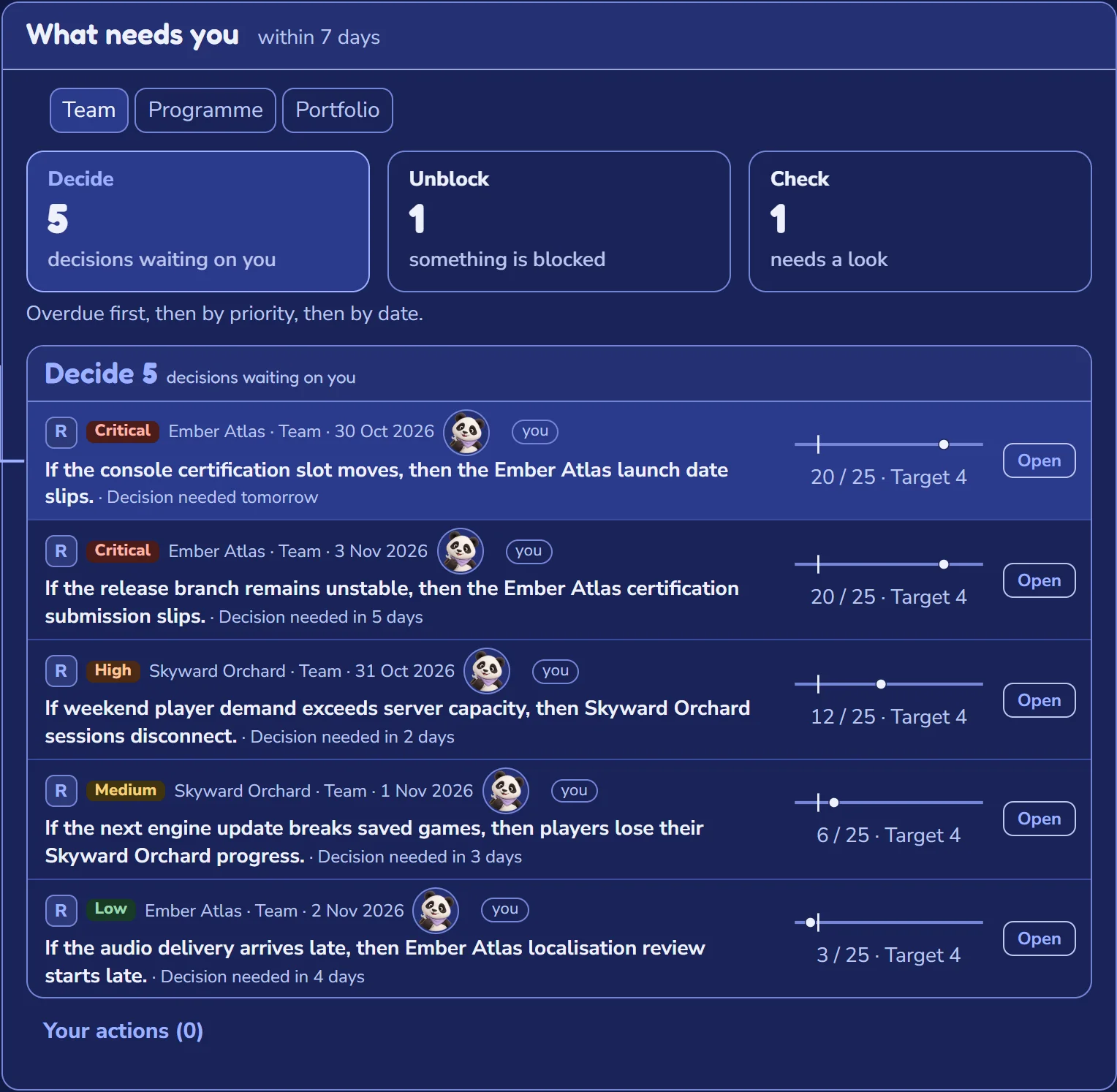
Risk is reviewed alongside delivery, so it does not drift off into a reporting cycle of its own.
Team and cross-team review cadence
Clear follow-up responsibilities
Escalation routes and decision thresholds
Review points for milestones, dependencies and delivery pressure
03
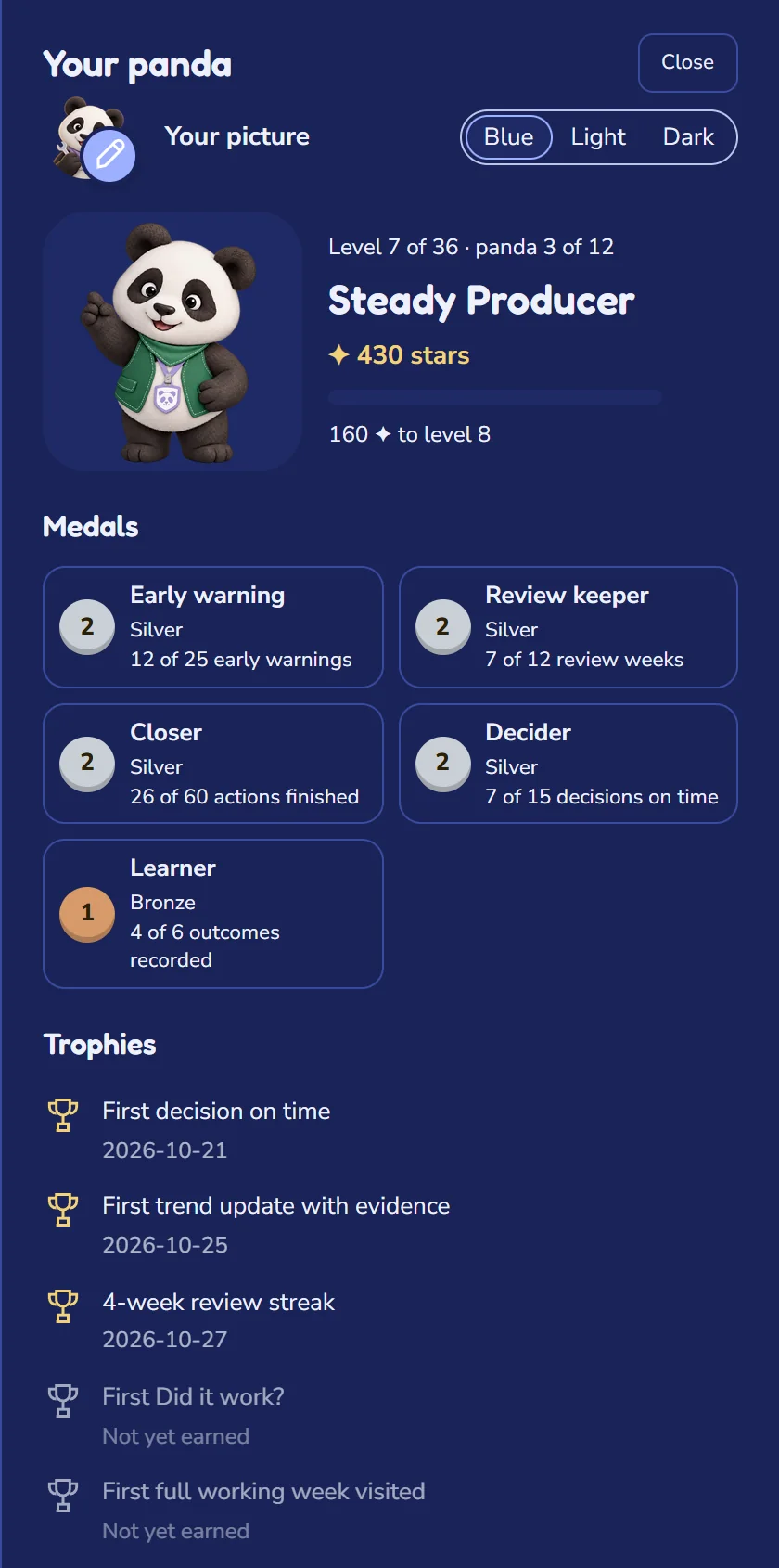
Habits people keep
Build shared habits across production, design, engineering, QA and leadership.
A common language for uncertainty
Earlier escalation as normal professional behaviour
Clear expectations for ownership and communication
Risk work inside existing delivery tools
01 · Put the system into practice
From kick-off to follow-through.
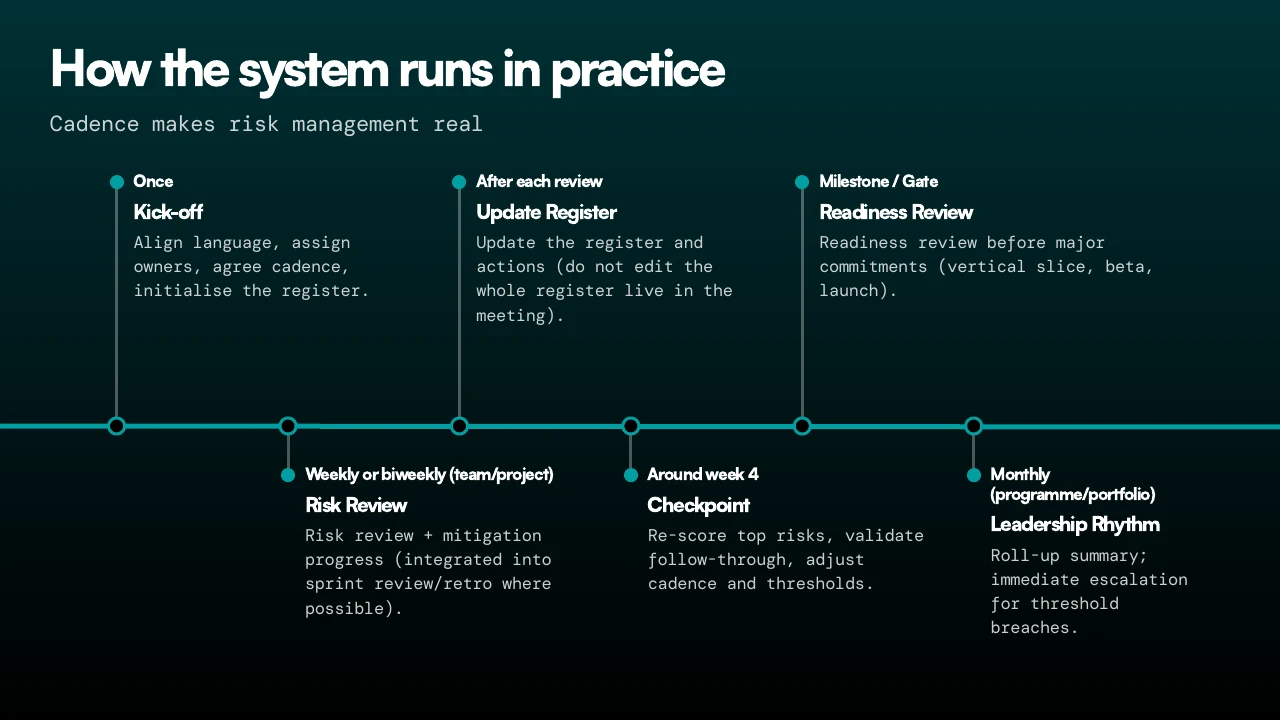
Agree the language, owners and review cadence at kick-off. After that, team reviews, milestone gates and leadership reporting keep the risks and actions current.
Senior and executive producers, development and production directors, studio leaders and the project and programme leads who work with them.
It helps most when teams have the templates but no regular review, when nobody is sure who owns a cross-team risk or when leadership keeps asking for better evidence before it decides.
Across the development lifecycle
Apply the system through concept, production, launch, LiveOps and post-launch, including dependencies, external partners, milestone readiness and regulatory, security or data-related risks.
Alongside your existing tools
Keep Jira, Kanbanize, Trello or whatever you plan in now. Nobody needs a second layer of administration. The aim is clearer ownership, action and reporting inside the tools you already use.
Course learner review · Thinkific
Implementing a Risk Management System for Game Studios
★★★★★Rated 5 out of 5 by this learner.
Practical, Impactful and Immediately Applicable
“I completed the course with greater confidence, stronger practical skills, and a clearer approach to managing risks, decisions and accountability. The results have already had a tangible and positive effect on my work.”
What you are aiming for is a risk register that someone owns and keeps current, mitigation work people can see, cross-team problems raised earlier and decisions leaders can explain and come back to.
We are looking for a small, varied group of studios. You get your own private SRIS site, Liam's support and a real say in what we build next. In return we ask you to use it properly and tell us honestly where it helps and where it gets in the way.
May we use Google Analytics to understand how this website is used and improve it? If you accept, Google receives usage and device information and analytics cookies are stored on your device. Analytics stays off unless you accept. You can change your choice here at any time. Read about analytics.

 Ask the Production PandaGet in touch