
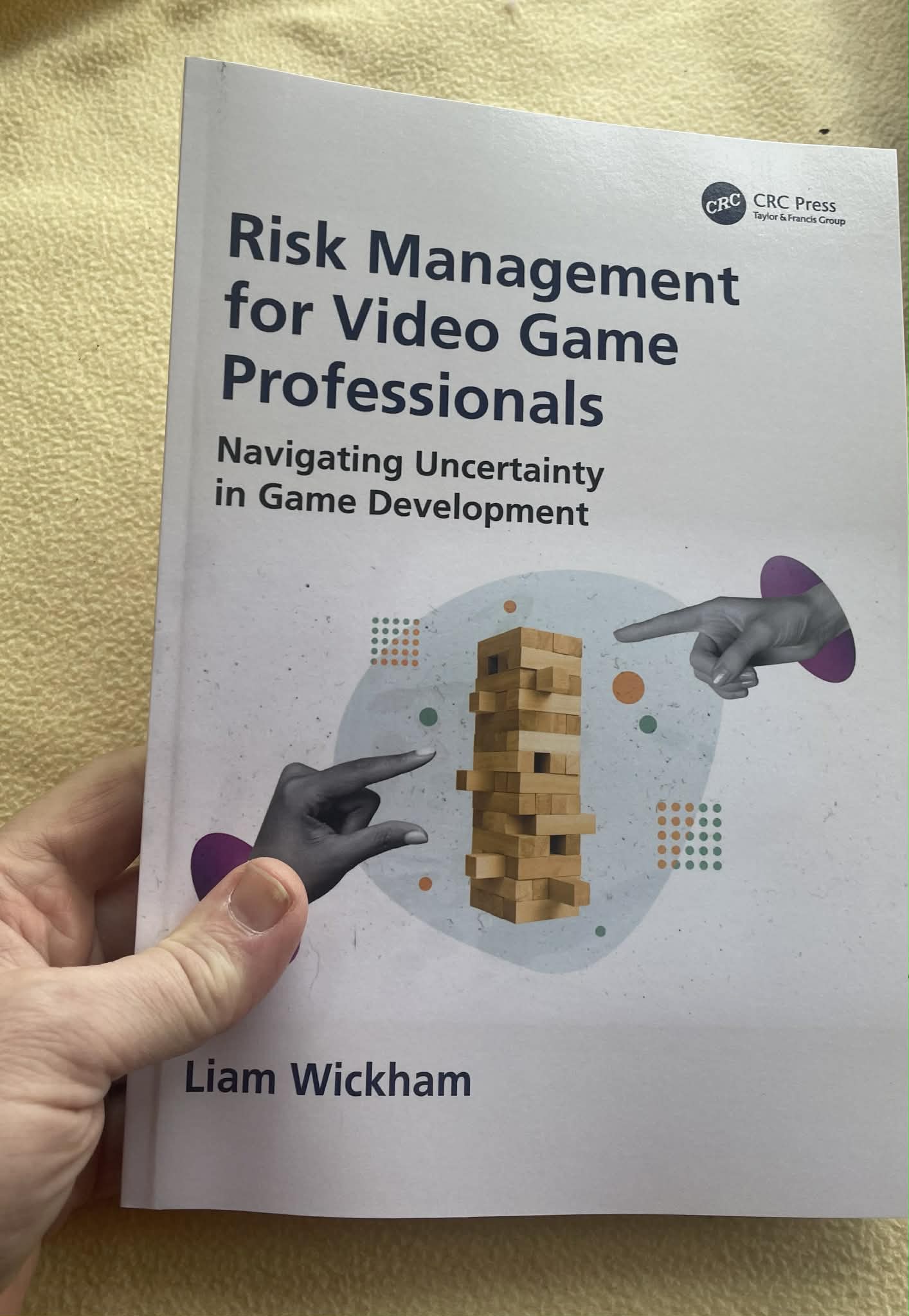
Game development is chaotic and complicated. A great team can still be undone by predictable failure patterns that repeat across projects and studios. In yesterday’s webinar I walked through “seven (which became nine)” critical risks, plus early signals and practical mitigations.
This post is a written companion to the session and can be used as a quick audit checklist.
1) Market misalignment: you build a game nobody wants
This risk is existential. A studio can spend years delivering something that does not meet a real market need, or whose audience is misunderstood.
Early signals
Late-stage copying of a trend mid-development
Greenlights driven by personal taste rather than validation
Confusion in marketing language: nobody can explain the game clearly
Mitigations
Clear market validation loops and early external feedback
Explicit success criteria that survive leadership changes
Honest repositioning decisions early, not late
2) Unclear vision and untracked vision drift
Vision can start clear and still drift silently. Everyone can feel it changing but nobody writes it down, which creates waste and misalignment.
Mitigations
Re-affirm vision at a defined cadence
Maintain an explicit decision log for changes
Use feasibility checks before accepting shifts
3) Pre-production shortcuts that create late-stage surprises
Pre-production is meant to de-risk the unknowns. Under schedule pressure, studios compress it and then pay later with late pivots, tech debt and instability.
Mitigations
Mandatory prototyping deliverables with explicit goals
Stage/lifecycle checklists (aim for a high pass rate before moving on)
Protect time for testing the riskiest assumptions first
4) Scope churn: scope creep, feature creep, and rework
There is always tension between discovery of fun and delivery reality. When scope expands without change control, teams crunch, schedules slip, and systems collide.
Mitigations
Structured change control (what changes, why, and what is displaced)
Evaluate impact across systems, not just the new feature
Timebox experimentation and create “kill criteria” for ideas
5) Communication gaps: silos, undocumented decisions, broken async
Small communication failures scale into large rework, especially in distributed teams.
Mitigations
Single source of truth (and agreement on what that actually is)
Decision logs (simple, searchable, non-negotiable)
Dependency mapping for cross-team handoffs
Clear async rules for time-zone handovers
6) QA underinvestment and the compounding bug problem
If QA is treated as an end-of-project activity, defects and uncertainty compound until stability and delivery collapse.
Mitigations
Embed QA early (test planning alongside feature discovery)
Treat external QA as a partnership, not a last-minute bolt-on
Maintain a quality bar that keeps “unknown unknowns” from multiplying
7) Disruption from above: strategic pivots without feasibility assessment
Leadership changes can invalidate plans overnight. The decision might be justified, but late, top-down pivots without bottom-up feasibility checks can collapse delivery plans and morale.
Mitigations
Bottom-up feasibility assessment before committing
Governance that forces trade-off clarity (what is being cut)
Risk and issue escalation paths that are safe to use
8) The terrors of launching: launch-day failure and negative reception
Launch failures remain common: service instability, day-one patches, exhausted teams, and Live Ops that is not ready.
Mitigations
Minimum launch-readiness criteria (performance, compliance, security, Live Ops)
Realistic post-launch ownership and staffing
Clear contingency plans for stability and comms
9) Reputational and public trust risk (and how recovery actually works)
Bad launches are survivable, but recovery depends on behaviour: transparent communication, apology where needed, and making players part of the recovery story.
Mitigations
Immediate, honest comms cadence
Clear roadmap of fixes and accountability
Player-centred recovery posture, not corporate silence
Download
If you want the PDF board export and the companion resources, use the download link here:
https://game-production.thinkific.com/products/digital_downloads/criticalrisks